
Honoring Courage: A Powerful Reflection on the 81st Anniversary of the Port Chicago Disaster
Before this trip, I had never heard of the Port Chicago Disaster. And honestly? That’s the problem.
After spending the week in Concord, CA, attending events planned around the 81st Anniversary of the Port Chicago Disaster, I can say this: my life is forever changed.
Thanks to Visit Concord, who hosted me for this experience, and the work of the Port Chicago Alliance, I was immersed in a history lesson I didn’t know I needed. And y’all, I’ve got stories for days. This is the first of what I believe will be many.
What is the Port Chicago Disaster?
If you’re like me, you might not have heard of the Port Chicago Disaster before. On July 17, 1944, at the Port Chicago Naval Magazine in Concord, CA, a massive explosion killed 320 sailors and civilians, most of them young, Black sailors. It remains the deadliest homefront disaster of WWII.
The explosion happened during the loading of munitions onto Navy ships. This was a job that Black sailors were disproportionately assigned to, despite having little to no proper training in handling explosives. The work was rushed, overseen by white officers pushing for speed over safety, all while racial segregation and discriminatory practices were deeply ingrained in military operations.
The tragedy didn’t end with the explosion. Afterward, 50 Black sailors refused to return to the same unsafe, racially unjust working conditions, leading to what became known as the Port Chicago Mutiny. These men were court-martialed and dishonorably discharged from the Navy.

A Reflective Hike at Thurgood Marshall Regional Park
During our trip, we were granted special access to Thurgood Marshall Regional Park, which is not yet open to the public. This park, named after the first Black U.S. Supreme Court Justice, is deeply connected to the Port Chicago story and will serve as a space for reflection, education, and healing when it opens.
Our group set out for a short hike, winding through rolling golden hills dotted with oak trees and open grasslands. The natural beauty stood in stark contrast to the painful history tied to this land.
We weren’t alone on the trail. Community members, descendants, a youth group, and hikers from Outdoor Afro were also there taking in the scenery and discussing the history. Watching young people engage with this story in such an intentional space was powerful. It felt like a bridge between the past and the future and a promise that the lessons of Port Chicago will not be forgotten.
As we walked, I found myself thinking about justice, resilience, and the role of nature in helping us process hard truths. It was the perfect place to pause, breathe, and carry the stories we had heard earlier in the week into deeper reflection.

Walking the Grounds: The Ceremony at Port Chicago Naval Magazine National Memorial
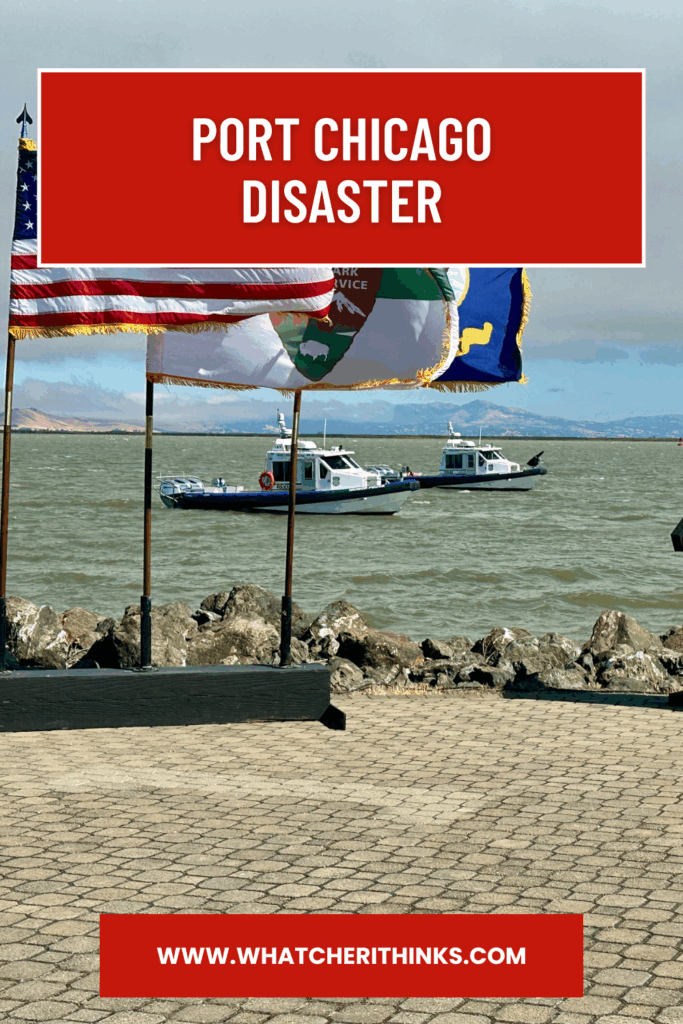
One of the most powerful moments of the trip was attending the official ceremony commemorating the 81st anniversary of the disaster at the Port Chicago Naval Magazine National Memorial. Standing on the grounds where the disaster occurred, I felt the weight of history pressing in on me.
We heard from passionate speakers at the event. Every word carried the emotion of decades-long injustice and the relief of long-overdue recognition. Meeting individuals whose tireless advocacy helped overturn those wrongful convictions in 2023 was humbling.
Looking out over the water, knowing this was the exact site where hundreds of lives were lost, was a sobering reminder of the cost of racism, neglect, and indifference. The air felt heavy, almost still, as if the land itself was holding its breath.

Meeting the Descendants: Stories of Silence and Discovery
One of the most impactful parts of my visit was meeting descendants of the Port Chicago 50. Some shared how their fathers never spoke of what happened. The dishonorable discharge carried a heavy, unspoken weight of shame.
Honoring the Fallen: Visiting Golden Gate National Cemetery
We also took a trip to nearby San Francisco, where many of the soldiers who died in the Port Chicago Disaster are buried at Golden Gate National Cemetery. There, I felt the enormity of what was lost: lives, opportunities, justice, and dignity.
It’s one thing to read about history, but it’s another to stand where history still echoes. It was a heavy experience.

Educating the Next Generation
What inspired me most was seeing how organizers are making sure youth are part of this story. Several events throughout the week included students and young people. That was no accident.
“We’re intentional about involving youth because they need to know this history,” said Yulie Padmore, Executive Director of the Port Chicago Alliance. “It’s the only way to keep the legacy of the Port Chicago Disaster alive.”
This history is a lesson on racial injustice, courage, and the ongoing fight for recognition.
Full Exoneration at Last
Though President Bill Clinton issued a pardon to Freddie Meeks, one of the convicted sailors, in 1999, this relief did not extend to the other sailors. Meeks was the only surviving member to formally petition for a pardon. Several of the others declined to pursue a pardon. They believed it would suggest they were guilty and merely forgiven.
Want to Learn More? Start with These Books
Even though I spent five days in California learning more about this disaster, I still have so many questions. I can’t wait to dive into The Port Chicago Mutiny by Robert L. Allen, a book that captures the full scope of this history. If you want to understand more about this critical moment in Black and military history, I highly recommend grabbing a copy.
📚 The Port Chicago Mutiny by Robert L. Allen
📚 The Port Chicago 50: Disaster, Mutiny, and the Fight for Civil Rights by Steve Sheinkin
Share This History
This is a story worth sharing. If you’ve never heard of the Port Chicago Disaster, I invite you to learn more and then tell a friend. This history deserves to be remembered, honored, and passed on.
Special thanks again to Visit Concord for hosting me. I’ll be unpacking this experience for a long time to come.
Have you heard of the Port Chicago Disaster? Let me know in the comments. I’d love to hear your thoughts or stories.


