Concert at Protective Stadium: Worth the Hype? Here’s my full review.
Birmingham just proved it can hang with the big concert cities. Let’s talk about my experience at a big concert at Protective Stadium.
A few weeks ago, I attended my first stadium-level concert in Birmingham and experienced something that rivals anything you’d find in Atlanta, Nashville, or Charlotte. The Chris Brown and Usher R&B Tour at Protective Stadium delivered an experience I wasn’t expecting in the Magic City.
Spoiler alert: Birmingham has entered the concert chat, and it’s ready to stake its claim among the best places to see a show.
You may be thinking: does Protective Stadium actually live up to the hype for concerts? Is it worth planning a trip to Birmingham just to catch a show here? I spent an entire evening at the venue for this R&B Tour double-header, and I’m breaking down everything from parking to production quality so you know exactly what to expect.
Here’s what you need to know before you buy tickets to your next concert at Protective Stadium.
Some links in this post may be affiliate links. If you click them and make a purchase, we earn a commission, but it won’t affect your purchase price or experience.
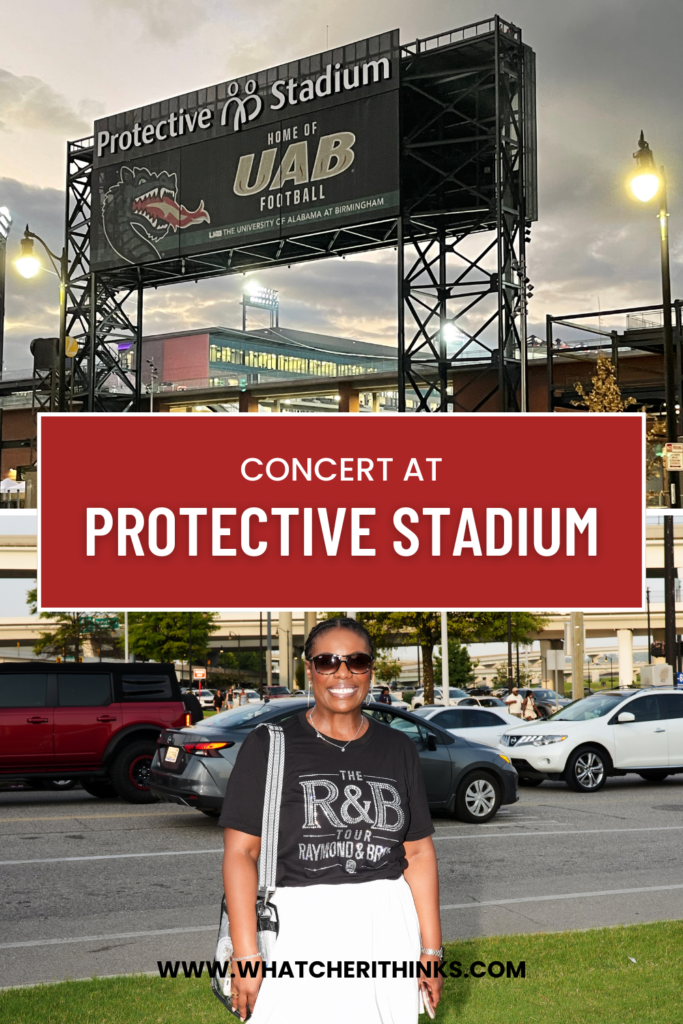
What Makes Protective Stadium Different for Concerts
Most stadiums are built for football, then awkwardly retrofit for concerts. Protective Stadium felt like it was built for both from day one.
Protective Stadium is part of the Birmingham-Jefferson Convention Complex campus. The venue opened in 2021 as home to the UAB Blazers football team and Birmingham Legion FC, but it was engineered to handle a wide spectrum of entertainment content. That planning shows up in ways most casual concertgoers won’t notice but will absolutely feel.
Here’s what sets it apart from typical stadium concert venues:
- Fixed seating that actually faces the stage properly. Unlike older football stadiums where half the crowd stares at performers from a 90-degree angle, Protective Stadium’s seating layout gives nearly every section a direct sightline to the main stage setup. For the Chris Brown and Usher show, even the upper-level seats felt engaged with the performance.
- Sound engineering that doesn’t rely on stadium echo. The acoustic design channels sound forward instead of letting it bounce around concrete walls. During the R&B Tour, vocals were crisp and bass was punchy without turning into mud in the upper sections.
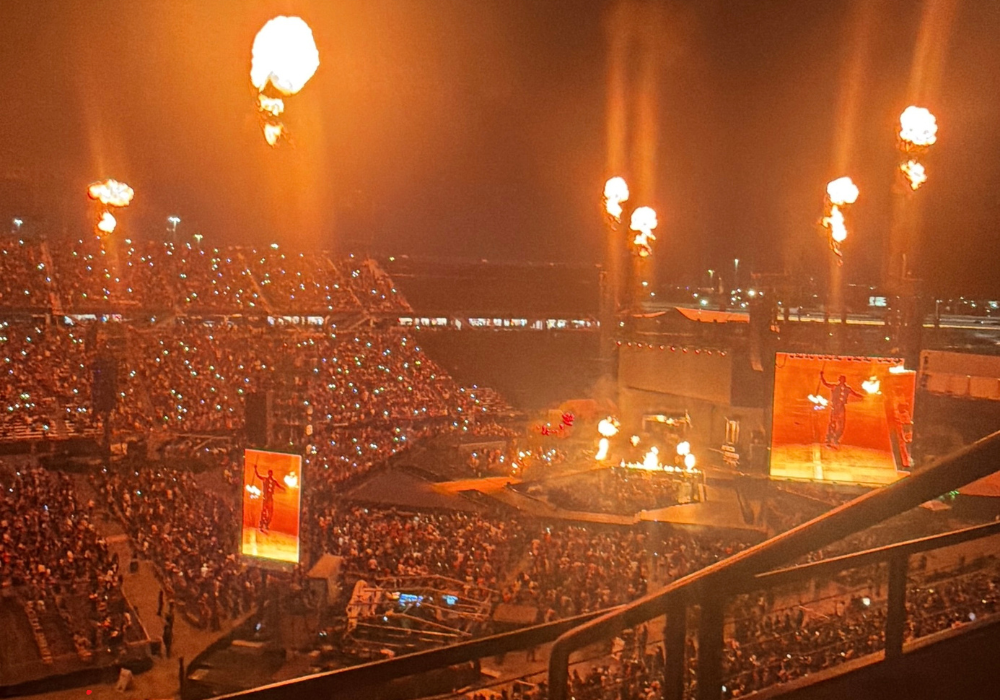
- Production rigging built for modern concert demands. The infrastructure can absolutely handle the massive LED screens, lighting rigs, and pyrotechnics that headline tours demand. This isn’t a venue where artists have to scale back their vision. (Heck, I’ll admit, I was gazing at the screens more than once during the concert because they were just that clear and crisp!)
Most stadiums force artists to work around limitations. Protective Stadium was built to let them execute the show they planned.
That difference is subtle on paper but obvious in person. The level of production quality I witnessed during this concert matched what I’ve seen at purpose-built arenas in much larger markets.
Getting to Protective Stadium and Parking Reality
Let me save you some stress right now.
Parking at Protective Stadium is not the nightmare you’re picturing based on other stadium experiences. I’ve sat in post-concert gridlock in Atlanta that lasted longer than the opening act.
Birmingham’s setup is different because the venue sits on the BJCC campus near 24th St N, which was designed to handle large crowds across multiple events simultaneously. That infrastructure pays off big time on concert nights.
Public transportation is limited in Birmingham, so plan to drive or rideshare. Birmingham doesn’t have the transit options of bigger cities, which means nearly everyone is arriving by car.
But here’s the thing: the parking map for Protective Stadium shows multiple parking options within walking distance, including accessible parking close to the gates for those who need it, and they’re priced reasonably for a major concert. I paid $40 for a spot that put me six minutes from the south gate on foot.
Rideshare drop-off is well-organized. If you’re using Uber or Lyft, there are designated zones that keep the chaos contained. I watched the post-show pickup flow, and while there was a wait, it wasn’t the mob scene I’ve experienced at other venues.
Traffic flow after the show is surprisingly efficient. The road layout around the BJCC campus funnels cars out through multiple exits, and police direct traffic to keep things moving.
I was out of the parking lot and back on the highway in under 20 minutes after the encore. For a sold-out stadium show, I was impressed by the efficiency.
If you’re traveling to Birmingham specifically for a concert at Protective Stadium, I’d recommend arriving 45 minutes early to park, grab a drink, and walk in without rushing. And if you’d rather skip resale markup altogether, protective stadium tickets are available directly through the stadium ticket office or box office.
Ticket Prices and What You Actually Get
Let’s talk money.
Ticket prices for the Chris Brown and Usher R&B Tour ranged from around $75 for upper-level seats to $350+ for floor access and premium sections. That’s in line with what you’d pay for a co-headlining stadium tour in most mid-sized markets.
Accessible seating is thoughtfully placed and priced fairly. If you or someone in your group needs a companion seat or wheelchair-accessible section, Protective Stadium integrates those options throughout the venue instead of shoving them into a corner. I noticed families using accessible seating in the lower bowl with great sightlines, and the ticket prices weren’t inflated just because accessibility was involved.
Resale market is active but not out of control. I checked ticket prices the week before the show and day-of, and while there was markup on premium seats, it wasn’t the predatory nonsense you see in cities where scalpers dominate the secondary market. You can still find reasonable options if you’re willing to be flexible on seating location.
One hidden cost to note: Protective Stadium doesn’t allow outside food or drinks, which is standard for most venues. But the concession pricing is stadium-level expensive, so budget an extra $30 to $50 per person if you plan to eat and drink during the show. That’s not unique to this venue, but it’s worth factoring into your total cost.
Bag Policies and Security Checkpoint Experience
Here’s where most venues lose me.
I’ve been to concerts where the security line took so long I missed the opening act entirely. Protective Stadium’s bag policy and security setup are strict, but they’re also fast and clearly communicated. If you follow the guidelines, you’ll get through without drama.
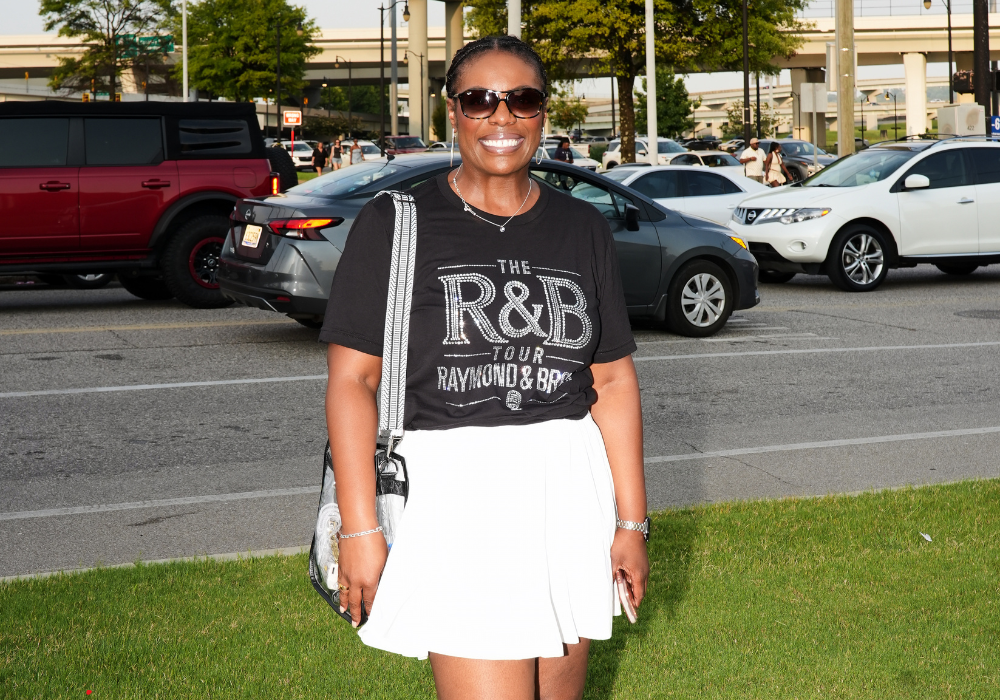
The bag policy is simple: clear plastic bags that meet size restrictions or small clutches or purses measuring 5″ x 7″ or smaller. I brought a small clear crossbody bag, and it sailed through security without a second look.
If you’re planning to attend an event here, check the full list of allowed items on the venue’s website before you leave home. They post updated guidelines for each specific event, and following them will save you the hassle of returning items to your car.
Security checkpoints move quickly because the staff actually knows what they’re doing. I’ve been to venues where undertrained security causes bottlenecks by overinspecting every pocket and keychain.
At Protective Stadium, the staff was professional, efficient, and friendly. I was through the checkpoint in under ten minutes, even with a decent-sized crowd arriving at the same time.
What you cannot bring: laser pointers, professional cameras, outside alcohol, or anything that could be used as a weapon. This is standard for most live events, but Protective Stadium enforces it consistently.
I saw a couple of people turned away for trying to bring in full camera rigs, and security didn’t budge. If you’re hoping to sneak in something questionable, don’t. They will catch it.
One thing I appreciated: the staff at the gates were happy to answer questions and point people toward solutions.
Accessibility at Protective Stadium
If accessibility is a factor in your visit, Protective Stadium has clearly put thought into it. A few things worth knowing before you go:
- Every gate at the stadium is ADA accessible, and signage helps direct guests to the entrance closest to their seating section
- Accessible parking and designated drop-off areas are available near select gates, and temporary ADA shuttles run on select event days
- ADA and wheelchair-accessible seating can be purchased directly through Ticketmaster, with the option to buy companion seats alongside it
- All restrooms throughout the venue are ADA accessible
- Assistive listening devices are available free of charge at guest services, and ASL interpreting can be requested in advance for an event
- Service animals are welcome, and guests who use mobility devices are encouraged to bring their own
If you have specific accessibility needs, it’s worth reaching out to the venue ahead of time to confirm details for your particular event, since some accommodations (like interpreter requests) need advance notice.
The Chris Brown and Usher R&B Tour Experience
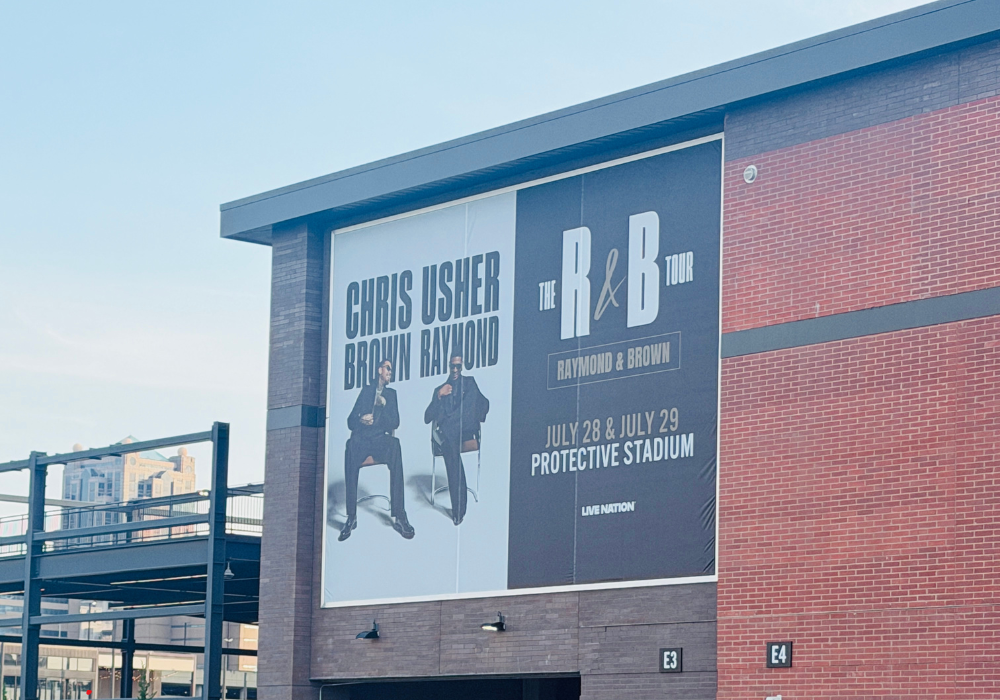
I had never seen Chris Brown or Usher in concert before, so I was really excited to see both of these iconic performers on the same stage. The R&B Tour didn’t just deliver two great performances. It delivered a fully realized, unified performance with distinct energy, seamless transitions, and production value that justified every dollar of the ticket price.
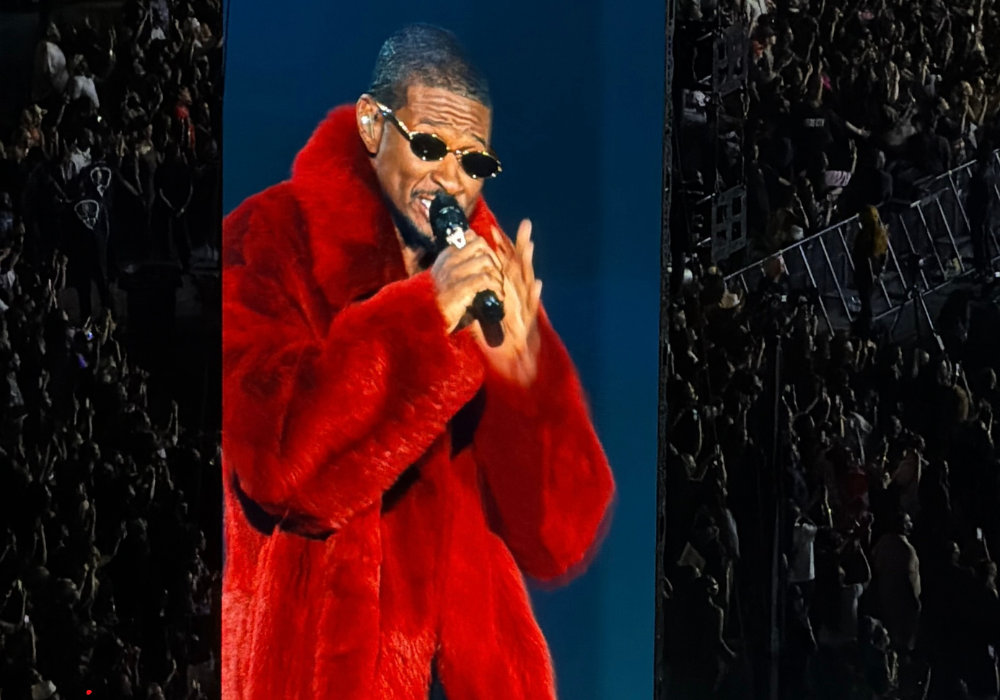
Usher opened the night, stepping out in a red fur floor-length coat — an interesting choice given the Alabama heat, but it set an immediate tone of old-school showmanship. His set leaned into nostalgia without feeling dated.
He brought out the classics, layered in choreography, and connected intimately with the crowd, proving he’s still the standard for R&B showmanship.
Then Chris Brown took the stage with a completely different vibe. His high-octane choreography solidified why he’s still one of the best live performers in the genre. The stage setup included massive LED screens that shifted between close-ups, abstract visuals, and live crowd shots, and the lighting rig was synchronized to every beat drop, with pyrotechnics hitting at exactly the right moments without being excessive.
He ran through a setlist that balanced radio hits with deeper cuts, and the crowd was locked in from the first song.
It would’ve been easy for the shift from Usher’s smooth, intimate set to Chris Brown’s high-energy one to feel like whiplash, but it didn’t. The video transitions between sets kept the energy flowing instead of creating a hard stop, and the props moved flawlessly between segments with zero dead air or awkward setup time.
You could tell there was real thought put into the pacing and visual storytelling. This wasn’t two headliners taking turns on the same stage, it was a single, unified production that still gave each artist their moment to shine.
What made the night even better was the two artists coming together for a handful of duets that tied the whole show together. Watching two performers with that much stage presence share the spotlight was a different kind of energy entirely.
The crowd’s reaction alone told you this was the moment everyone had been waiting for. Then, just as quickly, the show would pull back into each artist’s individual set, so you got the best of both worlds: standalone moments to fully soak in each artist’s style, and joint moments that reminded you why this pairing made sense in the first place.
The venue’s sound system handled both distinct styles perfectly. Chris Brown’s bass-heavy tracks didn’t turn into distorted noise, and Usher’s vocal clarity never got lost in the mix.
Concessions, Bathrooms, and Venue Logistics
Let’s get into the stuff nobody talks about but everyone cares about.
Concessions at Protective Stadium are what you’d expect from a modern venue: overpriced but varied. The positive is that there are enough concession stands spread throughout the venue.
Payment is card-only at the stands. If you’re still carrying cash everywhere, be sure to bring alternate payments to the venue. Debit cards and credit cards are the norm here, and the contactless payment setup keeps lines moving faster than venues still fumbling with cash registers.
Bathrooms are plentiful and well-maintained. I’m giving Protective Stadium credit here because this is where a lot of venues fail hard. The restrooms were clean and stocked.
Cell service held up surprisingly well. I was able to text, check socials, and post Instagram stories without the network collapsing.
What Protective Stadium Gets Right for Live Music
This venue understands what concertgoers actually care about.
I’ve been to stadiums that feel like they’re doing you a favor by hosting a concert. Protective Stadium feels like it was built to make live entertainment the priority.
That mindset shows up in the details that most venues overlook.
- Sightlines are consistently good across the seating chart. I looked around during set breaks and there wasn’t a truly bad seat in the house. Even the upper-level corners had clear views of the stage and screens.
- The staff is trained to handle concert crowds, not just football fans. I interacted with ushers, security, and concession workers, and every single person knew how to manage the specific chaos of a music event.
- The venue invests in production infrastructure that lets artists deliver their full vision. The rigging, lighting, and sound systems are built for modern touring standards, which means you’re seeing the show the way the artist intended.
- Crowd flow is managed intelligently. Wide concourses, multiple entry and exit points, and clear signage keep people moving instead of creating bottlenecks.
These aren’t flashy upgrades that sell tickets. They’re operational choices that make the experience better from start to finish. And when you’re spending $100+ on a ticket, those details matter.
Final Verdict: Is a Concert at Protective Stadium Worth It?
Yes, but with context.
If you’re a live music fan in Alabama or the Southeast, Protective Stadium is now one of the best options for stadium-level concerts within driving distance. The venue delivers on sound quality, sightlines, production capability, and crowd management in ways that rival larger markets.
The Chris Brown and Usher R&B Tour proved that this venue can handle major touring acts without compromising the artist’s vision or the audience’s experience.
The gaps are real but not dealbreakers. Concession variety could be better. The surrounding entertainment district needs time to develop. Public transportation options are limited. But none of those issues erase the fact that the core concert experience at Protective Stadium is excellent.
If you’re considering a trip to Birmingham for an upcoming event, I’d say go for it. Book your tickets, plan your parking, and show up ready to see a great show in a venue that actually respects live music. The Magic City is building something worth paying attention to, and Protective Stadium is a big part of that story.
Where to Eat Nearby
If you prefer to eat before the show, there are some great restaurants near Protective Stadium. Here are some of my recommendations:
Pre-show (walkable, in Uptown right next to the stadium):
- The Southern Kitchen & Bar — Right in Uptown with a direct view of Protective Stadium from the patio. Great for elevated Southern comfort food and a pre-show cocktail without needing a car.
- Santos Coffee — If you’re going for an earlier show or want to caffeinate before a long night on your feet, this local Guatemalan coffee shop in Uptown is a solid stop.
- Uptown Cantina — Sits in the same Uptown dining cluster steps from the stadium gates. Serves Mexican and Fresh-Mex cuisine. Ideal if you want something quick and casual before doors open.
- Texas de Brazil — Brazilian steakhouse a few minutes from the venue, good for a group or a “make a night of it” pre-show dinner.
- Eugene’s Hot Chicken — Southern-style, Nashville hot chicken plus Southern sides like mac and cheese and collard greens. It’s located right in Uptown, close to the BJCC.
- K & J’s Elegant Pastries — A custom cake shop and creamery known for cupcakes, custom cakes, cookies, milkshakes (“Kolossal Milkshakes”), and ice cream.
A short drive away, if you want a sit-down dinner:
- Wooden City or The Essential — Both are downtown favorites for elevated Southern/American fare if you want something a step above stadium-adjacent casual dining.
Where to Stay Near Protective Stadium
If you’re planning a trip to Birmingham around a concert, where you stay can make or break how smooth your night goes. Here are my best recommendations, broken down by proximity to the venue.
Right on the BJCC Campus
The Westin Birmingham
Directly on the BJCC campus, just steps from Protective Stadium. Walk to dinner in Uptown, then walk straight into your seat — no car required.
- Connected to the BJCC via covered skywalk and across the street from Protective Stadium, so you can skip the outdoor walk entirely in bad weather
- Pet-friendly, with an outdoor pool and 24-hour fitness center if you’re making a longer trip of it
- Self-parking and valet available on-site, both with in/out privileges for the night
Sheraton Birmingham Hotel
Right next door to the Westin, same unbeatable location on the BJCC campus.
- Also connected to the BJCC via covered walkway — about a 5-minute walk to the stadium itself
- 757 rooms, so it’s a solid pick if you’re booking a larger group or traveling with friends
- On-site restaurant, bar, and 24-hour gym, plus valet parking if you’d rather skip the lot altogether
A Short Walk or Drive Downtown
Redmont Hotel, Curio Collection by Hilton
A historic, downtown property with more character than a chain hotel, a short drive from the venue.
- Birmingham’s oldest operating hotel, built in 1925. A good pick if you want charm over a standard chain feel
- Rooftop bar on-site, perfect for a nightcap after the show
- About an 8-minute walk to Protective Stadium if you’d rather skip driving
Elyton Hotel, Autograph Collection
Popular downtown pick with a rooftop bar — great if you want to keep the night going after the show.
- Moon Shine, the 16th-floor rooftop bar, offers a 360-degree view of downtown Birmingham
- About a mile from Protective Stadium, so plan on a quick rideshare or drive rather than walking
- Housed in the historic 1913 Empire Building, with a AAA Four Diamond rating if you want a more upscale stay
Hampton Inn & Suites Birmingham-Downtown-Tutwiler
The budget-friendly option, still an easy walk to Uptown and the BJCC.
- About a 6-7 minute walk to Protective Stadium
- Free hot breakfast included
- Housed in a historic building with local Birmingham photography throughout, if you like a bit of local flavor with your stay
Cherith Glover Fluker writes about travel and local events at WhatCherithInks and is the author of Secret Birmingham: A Guide to the Weird, Wonderful, and Obscure. She’s spent years covering what’s actually worth doing in the city — this time, from a seat at Protective Stadium.